You will not out-discipline a noisy calendar
The day you become a lead, your calendar stops being yours. One dumb 2x2 grid, sorted as a team and out loud, got mine back. Includes the meeting that nearly cost me an engineer.
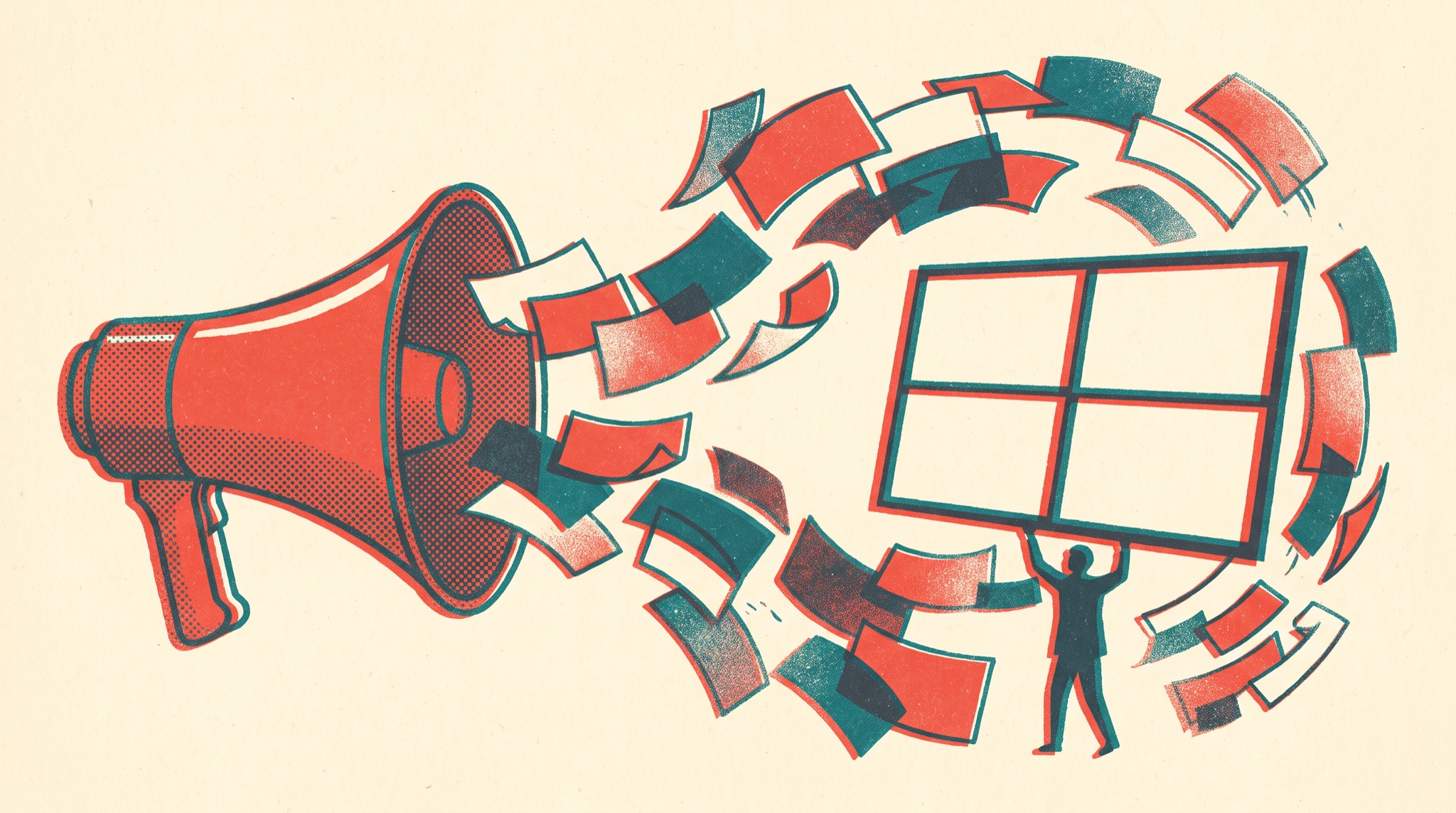
We nearly lost a good engineer over it.
The endless debate about the font size on graph metadata. Not the font, the recurring meeting about the font.
So the meeting died.
The thing that killed it was a dumb 2x2 grid, sorted as a team and put on the wall.
You will not out-discipline a noisy calendar. You'll lose. I lost for months before I admitted it. This post is the one dumb thing that worked.
The work gets louder
The day you become a team lead, your calendar stops being yours. The work doesn't get harder. It gets louder. And loud is a terrible proxy for important.
It's not a personal failing, either. Cross, Rebele and Grant measured it in "Collaborative Overload" (Harvard Business Review, 2016): time spent on collaborative work grew 50% or more over two decades, and at many companies people burn about 80% of the workday in meetings, on email, and answering colleagues' requests.
That's the baseline for everyone. Then you get promoted, and every request in the building learns your name.
My last real production code was around 2015, held together with commented-out lines and // PLEASE WORK. The long version of that story: director who codes again.
So I'm not here to lecture you about discipline. I'm here because I was bad at this and found exactly one thing that helped.
Urgent screams. Important waits.
Eisenhower, 1954, quoting a college president whose name history dropped: "I have two kinds of problems, the urgent and the important. The urgent are not important, and the important are never urgent."
The grid isn't his either. Covey drew the four boxes decades later, in The 7 Habits of Highly Effective People (1989), around a line Eisenhower had himself borrowed. The internet attached Ike's name to the whole thing.
                URGENT                 NOT URGENT
            +--------------------+--------------------+
 IMPORTANT  | do it now          | the box that       |
            | (the actual fire)  | actually pays you  |
            |                    | back: refactors,   |
            |                    | mentoring, the     |
            |                    | rewrite            |
            +--------------------+--------------------+
 NOT        | delegate or say no | don't. just don't. |
 IMPORTANT  | (someone's loud    | (the meeting that  |
            |  ticket)           |  was a Slack msg)  |
            +--------------------+--------------------+
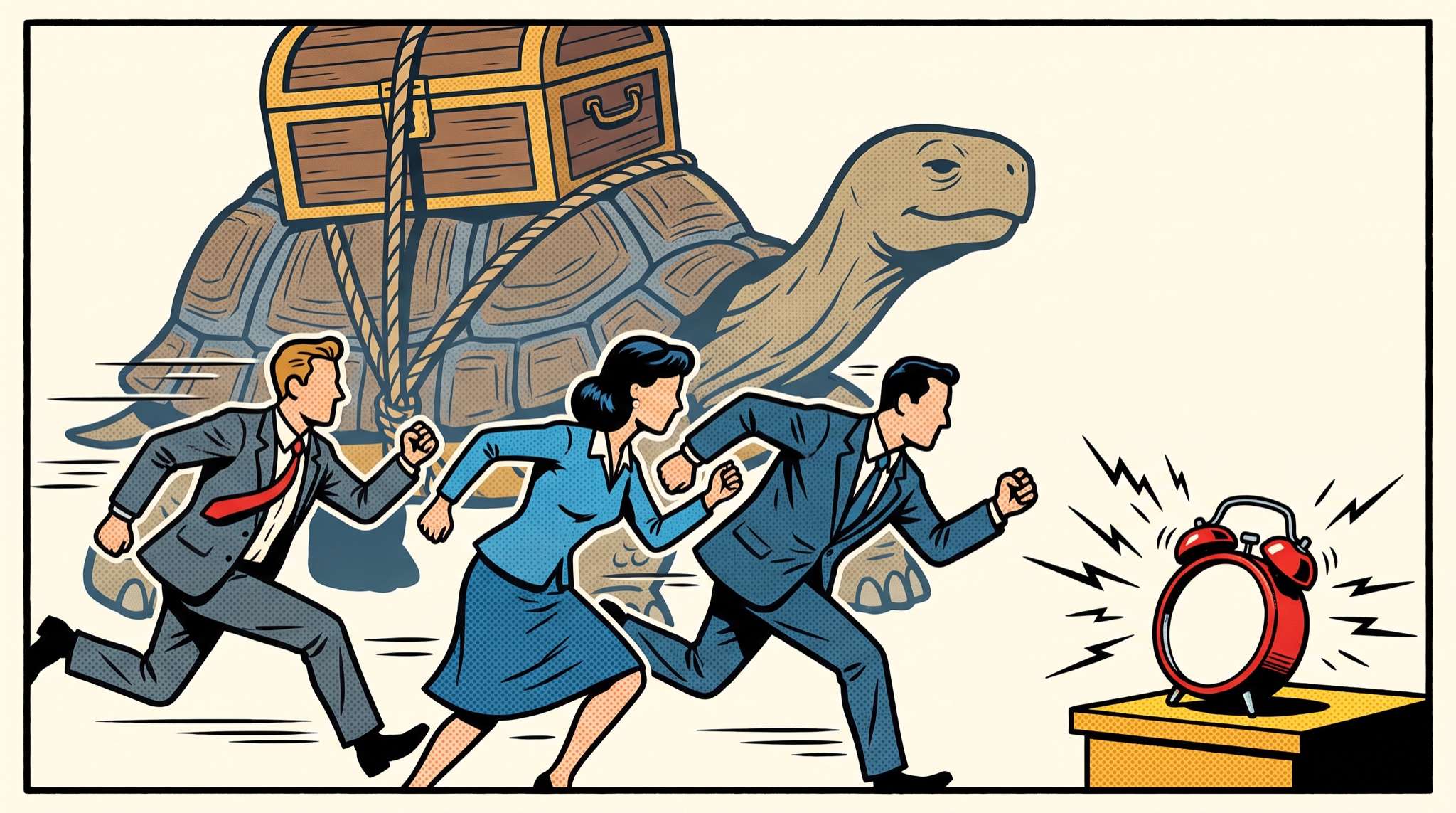
Urgent screams. Important waits politely, then turns urgent the moment you've ignored it long enough. The refactor doesn't file tickets. It just quietly becomes an outage.
And your brain is rigged for the wrong box. Zhu, Yang and Hsee ran five experiments ("The Mere Urgency Effect," Journal of Consumer Research, 2018): people consistently chose objectively lower-payoff tasks over higher-payoff ones, purely because the low-payoff ones were framed as urgent. Urgency wins even when the payoff math says it shouldn't.
Why this grid survived
It worked on me for a specific reason. I have an ADHD brain. My son and I share the wiring, and explaining recursion to him is still the hardest thing I do all week.
Left alone, that brain chases whatever is shiny and loud. Clever systems demand more attention than they save. The matrix is simple enough to survive my attention span.
When I first saw it, I assumed it was the kind of thing HR makes you do at a retreat. I was desperate, so I tried it anyway.
Mid-rewrite, everyone wanted everything
We were rewriting our alerting platform. Monolith to stateless streaming. Single region to multi-cloud. The kind of project that needs a quiet year and never gets one.
Mid-rewrite, the feature requests poured in. Sliding windows. Relative thresholds. ML-based thresholds. On top of that, support tickets arrived at every level of fake urgency.
I started to drown.
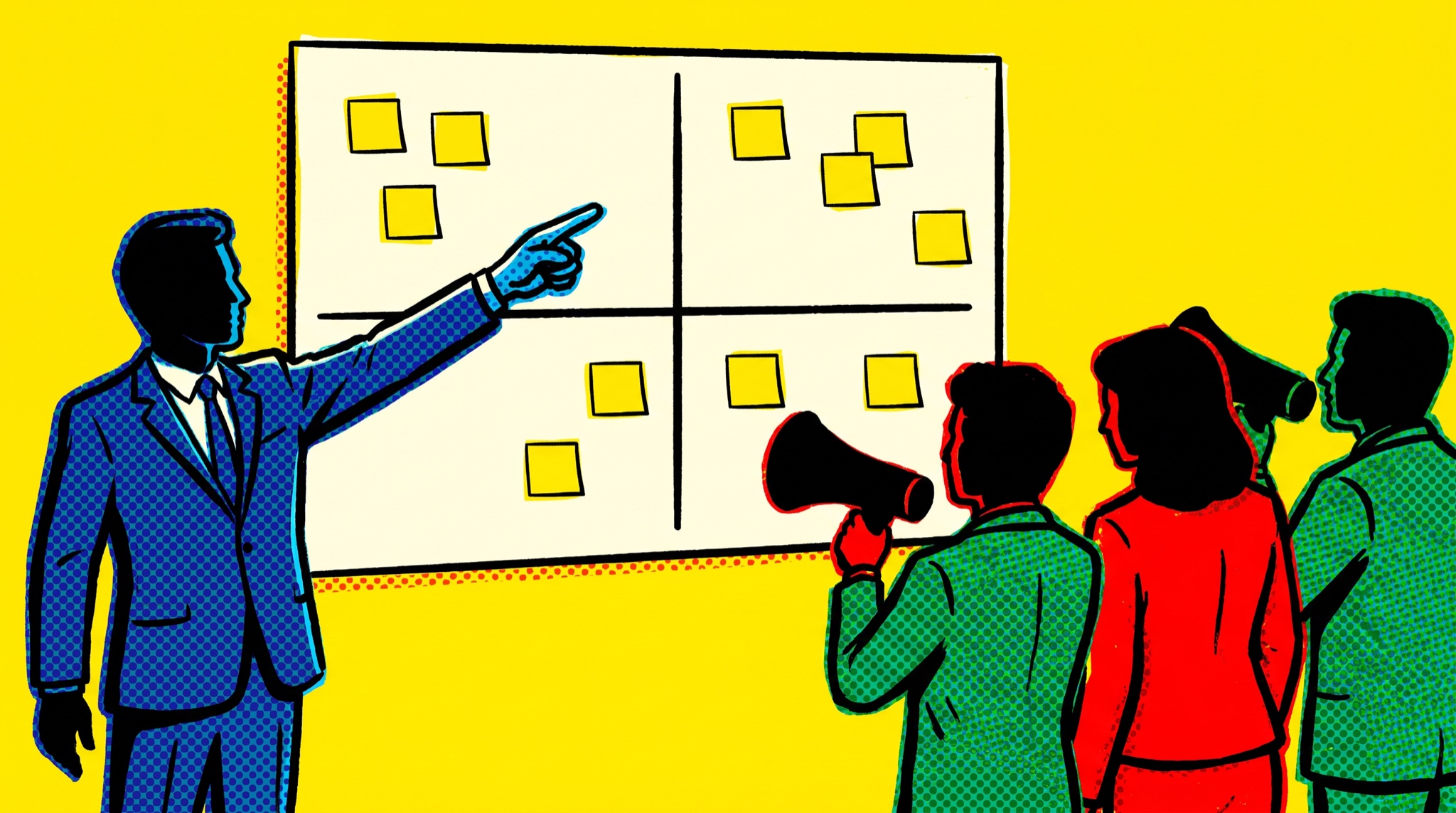
So we put everything into the four boxes. As a team, out loud. Everything on the plate got read out and boxed in front of everyone: the rewrite milestones, the feature menu, every screaming ticket. The sorted grid went up on the wall, where the whole team could see it.
Box one, do now: critical bugs and the core rewrite. The actual fire. Nobody ever argues about box one.
Box two, schedule and protect: refactoring, and letting the data scientists test new models. This is the box that pays you back, and it's the only box with no advocate. No customer screams for a refactor. No ticket escalates for mentoring. Left unguarded, box two gets eaten first and returns as box one.
So it got scheduled and protected. Not "when things calm down". Scheduled.
Box three, delegate: half of the "urgent" tickets. Urgent to someone, yes. Important to the rewrite, no. Handed off. Delegating without dumping is its own craft; more in no to the task, yes to the person.
Box four, kill: the recurring meeting about the font. It named a debate the team had agreed not to fund.
The unlock is the audience
Every write-up of this matrix sells it as a personal productivity tool. Fill it in privately, feel organized, lose anyway.
Keep the grid in your head and every "no" is your personal opinion. You spend your own credibility on each one. The loudest project manager in the room only has to win once. You have to win every time.
Put the priorities on the wall and the fight changes shape. "We don't have time for this" stops being your mood and becomes a shared decision. You're no longer the wall. You're just the guy pointing at it.
The public grid is also what keeps box two alive under pressure. When box one flares, something has to give, and by default it's always the refactor. On the wall, skipping box two is a trade the whole team watches you make. Visible trades get made less often.
Saying no on purpose is a bigger topic than one grid. The longer arc of learning it is in the art of strategic decline.
About that 36%
We shipped the rewrite on schedule. Bug resolution time dropped about 36%. Three feature launches landed on time.
Nobody A/B tested a management framework mid-rewrite. There's no methodology section. Take the direction, not the decimal.
I would love to credit my brilliance. It was mostly a 2x2 grid and the nerve to say "that's a box-four conversation, take it offline."
Four words and a wall
The phrase that survived that year: "that's a box-four conversation."
Four words doing the work of a twenty-minute argument. It names a box the team agreed not to fund.
When the noise comes for the important box, you don't need discipline. You need four words and a wall.
Do I still chase the shiny thing? Constantly. The wiring didn't change, and no grid will change it. What changed is the recovery time. The grid helps me find my way back before it costs anyone a sprint.