Nobody Opens a Ticket Called "We Hate Each Other Now"
The 1:1 is the first meeting sacrificed when the week catches fire. It should be the last. Quiet signals only travel down a channel that already exists, and trust vaporizes in one betrayal. The never-cancel case.

Two people on my team had quietly stopped talking to each other, and I found out by accident.
It was a throwaway line near the end of a 1:1. A half-sentence, no agenda, eleventh minute. It turned out to be a slow-motion collision about to take a project down with it. Nobody opens a ticket called "we hate each other now." There's no dashboard for it. That signal showed up exactly once, in the meeting most managers cancel first.
Defusing it cost me one conversation. Recovering from it would have cost a quarter. That's the return on the meeting, and it's invisible, because you never get credit for the disaster that didn't happen.
The 1:1 dies first when the week catches fire. It should die last.
Almost everyone has this backwards. And you can tell who does without reading a single calendar. Listen to how their team answers "how's it going." A real answer, or the one you give a stranger in an elevator.
My 1:1s run weekly, thirty minutes, every report. The slot doesn't move.
Status is not the product
Status you already have. The board has it. The standup has it. The commit history has it. If your 1:1s are status meetings, you're paying premium rent on a room you use as storage.
The real product is the work seen through their eyes instead of yours. What slows them down that they'd never file a ticket about. The thing bugging them that's two weeks from becoming a resignation letter. None of that shows up on a board. All of it decides whether the quarter lands.
How to run the half hour itself is a separate craft, and it's mostly shutting up. This post is about the thing that comes before technique: why the slot exists, and why it never moves.
Talk when nothing is wrong
The 1:1 is the only scheduled time the relationship gets maintained while nothing burns. That sounds soft. It's the entire mechanism.
If the only time you sit down one-on-one is when there's a problem, the meeting is an escalation channel, whatever the invite says. And nobody routes early, half-formed signals to an escalation channel. You don't book a crisis meeting to say "I think I'm burning out," and you don't schedule thirty minutes to admit a recruiter called and you picked up. Those signals surface sideways, in the eleventh minute of a conversation that had no agenda. Kill the meeting and you kill the channel they travel down. Then you mistake the silence for health.
Gallup put a number on the regularity itself. In its State of the American Manager research, employees whose managers hold regular meetings with them are almost three times as likely to be engaged as employees whose managers don't. A channel that exists beats a channel that's brilliant. That's all the number conditions on: whether the meeting happens at all. Gallup never measured if the meetings were any good.
Which flatters me less than it looks. The 1:1 that caught the collision wasn't a well-run meeting. It was a meeting that happened.
The Elevator Answer
All of this runs on trust, and trust is brittle in a specific way. Months to build. One betrayed confidence to vaporize.
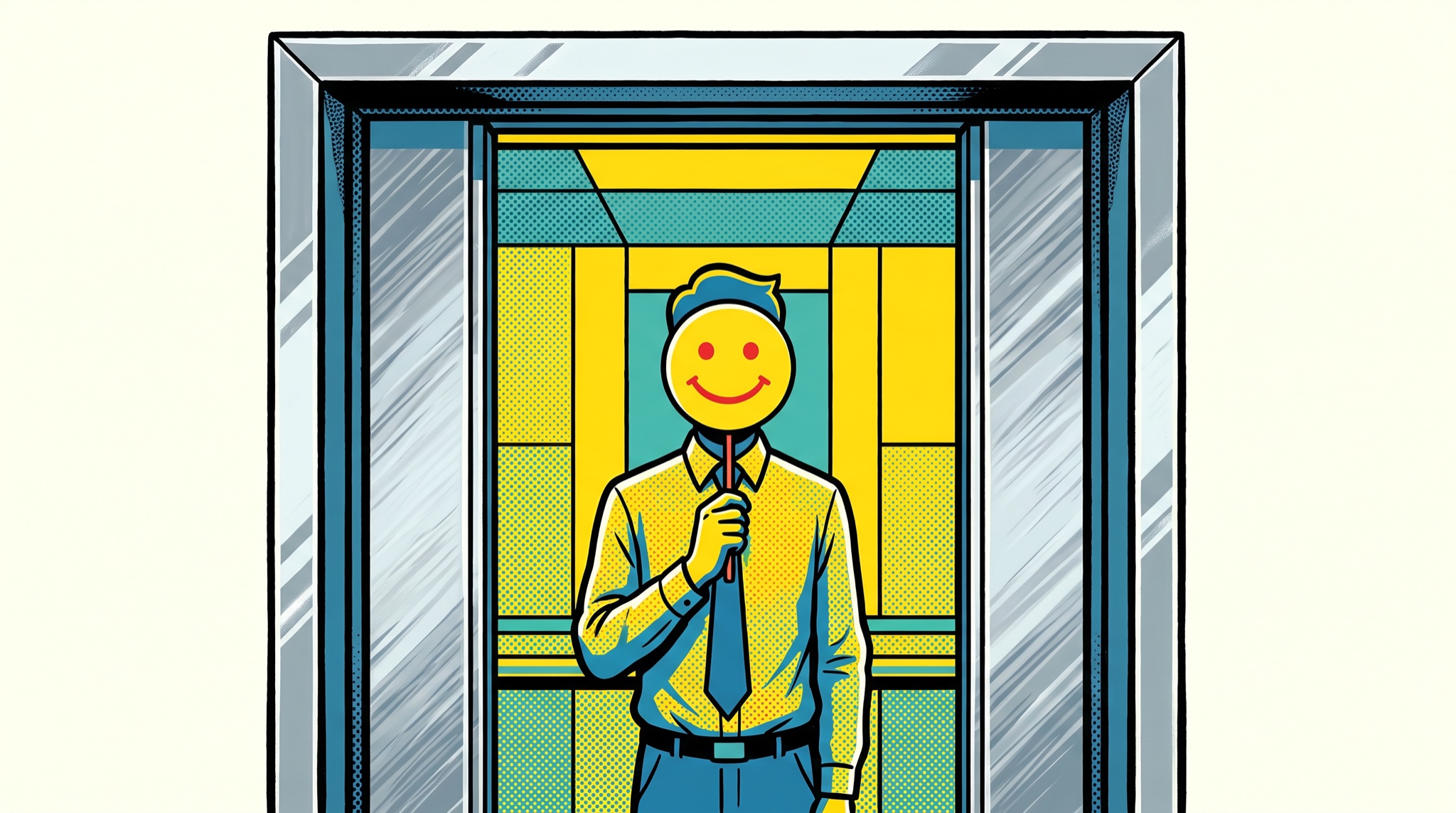
Betray something said in that room, even by accident, even by referencing it in front of the wrong person, and you don't lose a little credibility. You lose all of it in one move. From then on you get what I call the Elevator Answer: "all good," delivered with the exact warmth and information content you'd offer a stranger between floors.
The Elevator Answer is the tell. A team that's stopped trusting you sounds exactly like a team that's doing great. Same words. Same smiles. The difference surfaces later, in the exit interview, when six months of honest 1:1s you never got arrive in one afternoon, priced at a resignation.
One-directional trust is surveillance
The trust has to run both ways or it curdles. If feedback only flows down the org chart in that room, you haven't made it safe. You've built surveillance with a calendar invite. People clock that fast.
So I ask my people to use the time to review me. My priorities. My blind spots. Whether I've quietly become a micromanager. The most useful and least comfortable feedback of my career arrived exactly this way, from someone several levels junior who'd been handed permission to say it and used it. The permission has to be real, and you prove it's real by what you do with the first uncomfortable thing said out loud.
The schedule is the message
Michael Lopp, who writes as Rands, has two blunt rules for 1:1s in "Managing Humans." Same time each week. Always do it. His reasoning is the sharpest line in the genre: each time you bail on a 1:1, your report hears "you don't matter."
That's the mechanism of cancellation. People learn what you value by watching what you refuse to cancel, not by listening to what you say you value. Cancel their 1:1 for someone more important and you've published the ranking of your attention. They sit below whatever you took instead.
So I hold the line in the direction that costs me. I'll reschedule on my own manager to protect a report's 1:1. That trade, visible and repeated, lands harder than any speech about caring.
The premium is due every week
You can run a team without 1:1s. Plenty of people do. You'll still find out about every problem eventually. Just at the worst possible volume, on the worst possible day.
Andy Grove did the math in "High Output Management" back in 1983: ninety minutes of a manager's time can enhance the quality of a report's work for two weeks, some eighty-plus hours of output. That's the leverage ratio on the cheapest insurance you'll ever buy.
The catch is what makes it insurance and not a transaction. You pay the premium every single week, before you have any idea whether you'll need it. Skip a week and the premium looks saved. It is not. Somewhere in that skipped half hour was an eleventh minute, and whatever was about to surface in it just learned to stay quiet.
And I still catch myself eyeing the slot when the week is on fire. Thirty minutes, right there, unbooked-looking. The only reason I don't take it is that I already know what's sitting in the eleventh minute.