"Got a minute?" is the most expensive sentence in any company
I said yes to everything and got worse at everything that mattered. The fix: four ways to say no without the word, said early, without the apology tour.
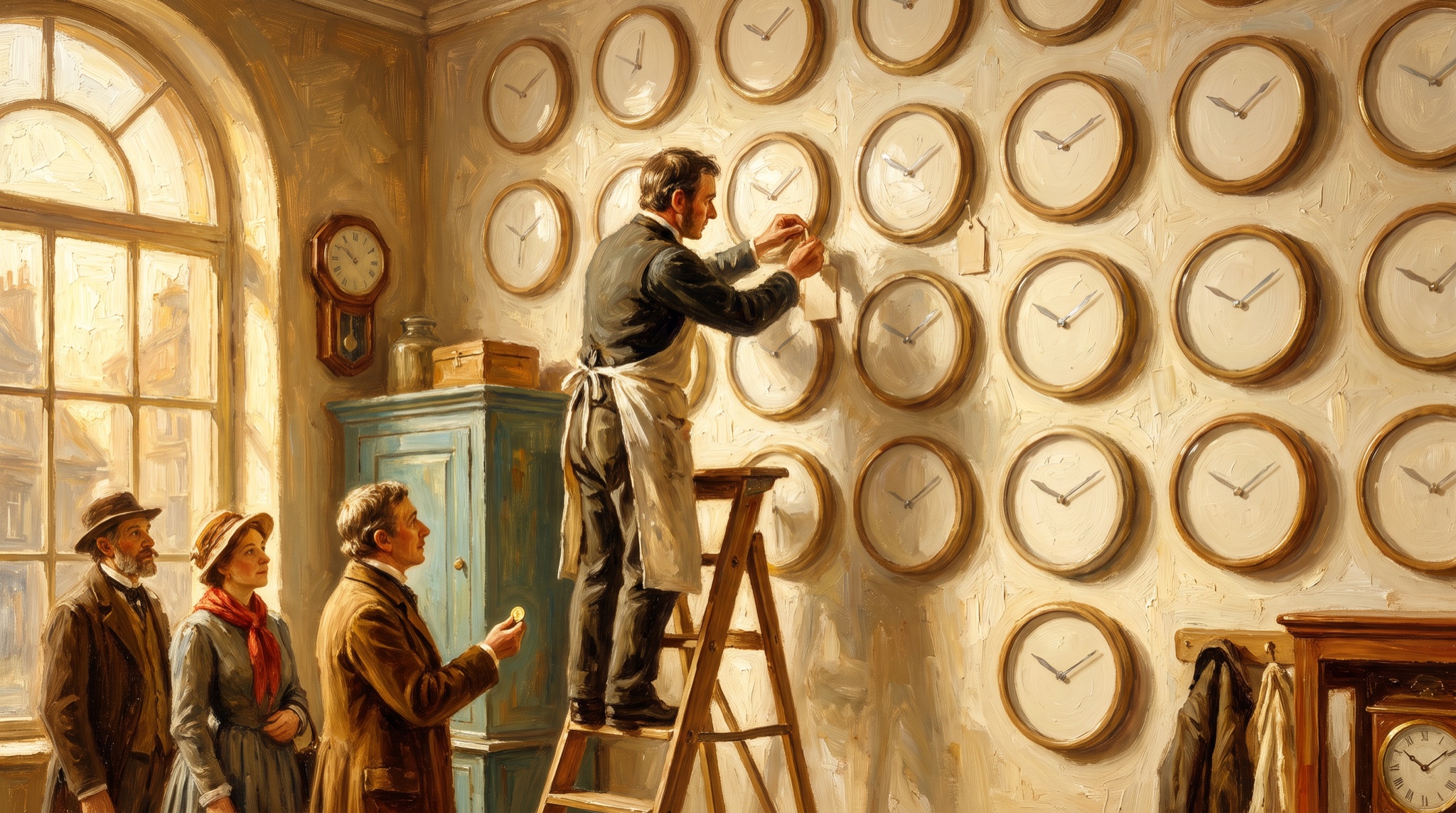
"Got a minute?" is the most expensive sentence in any company. It has never once cost a minute.
Each yes was individually defensible. That's the trap.
There's research on the real price. Gloria Mark's group at UC Irvine measured what an interruption does to you: about 25 minutes of refocus before you're back where you were. The minute isn't the cost. The minute is the down payment.
I learned this the slow way.
The job was yes
I got promoted out of backend into running a group, teams split across Israel and Bulgaria, right as my daughter was born. So I was learning to manage and learning to function without sleep at the same time.
And the job, as I understood it then, was to say yes.
The boss wants "a minute" that turns into two hours untangling a legacy system. The Chief Architect wants code samples for his personal blog, at midnight. Finance decides a database license "looks off." My own team leads bring me problems they could solve in their sleep.
I said yes to all of it.
No single yes broke anything, so nothing ever flagged. The damage only exists in aggregate. There's no dashboard for death by reasonable requests.
I called it being helpful. Doormat with a title is closer.

The bill
Drown in everyone else's small tasks and you get worse at your own big ones.
Bugs crept into the little code I still wrote. Strategy turned to mush the second anyone asked a follow-up question. I was short with my wife. I was telling myself my kid was "resilient."
And the quietest symptom, the one that scared me later: I'd stopped being able to tell a real problem from a loud one.
Triage is the manager's core loop. Mine was gone. When everything gets a yes, nothing gets a judgment, and the judgment muscle atrophies. You can't notice this one happening. The thing that notices is the thing that broke.
Then I did the math on the word "no."
The silent no
Every yes you don't mean is a silent no to the work you were actually hired to do.
You still declined something. You just declined the roadmap and the two teams waiting on it in Israel and Bulgaria, and hid the refusal behind a smile so nobody could bill you for it.
The spoken no costs one awkward minute. The silent no costs the quarter. And it never shows up on anyone's invoice, which is exactly why it's the one managers default to.
Nobody's doing this to you on purpose. Flynn and Bohns put numbers on the blindness in 2008: people asking for favors underestimate by as much as 50% how likely you are to say yes. The asker sees the cost of doing the favor. They're blind to how hard refusing it is for you.
So every "got a minute?" arrives pre-priced at zero, in good faith, by someone who isn't the one paying.
The price has to be said out loud.

Four ways to say no
I built a vocabulary. It's four sentences.
The redirect. "Yes, and the right person for this is X."
Hand it to the teammate who should own it. The work gets done closer to where it belongs, and they grow. This one also undoes damage I had caused myself: the team leads were bringing me solvable problems because my yes had trained them to. The redirect retrains, one request at a time.
The trade. "Happy to. Which of the two things you already gave me should I drop to make room?"
This is the invoice, handed back. You're not declining. You're making the asker do the prioritization they were outsourcing to you.
The process card. "Absolutely. A change like this probably has to go through the change-management forms first, let me dig those up."
Watch how fast "urgent" downgrades itself the moment paperwork is attached. Real urgency survives a form. Performed urgency doesn't.
The faux-innocent question. "Sure, and who covers my current work while I do this?"
No refusal anywhere in that sentence. Just arithmetic the asker has to do in front of you.
None of the four contains the word no. Each one just shows the asker the number Flynn and Bohns say they can't see.
What this is not
Strategic decline dresses up nicely. It can still go wrong.
It's not passive aggression as a personality. Okay, a little. But used constantly, people catch on, and you just become the difficult one. Used surgically, on the requests that don't deserve you, it buys back the hours for the ones that do.
And it only works paired with real, generous help on the things that actually matter. Drop that half and the whole thing curdles.
One more boundary. Everything in this post is about the request: which work you decline, on behalf of your team and your calendar.
What the no does to the person carrying the request is a different skill, and a harder one, especially when that person is your own report. I wrote that half separately: Refuse the Task, Keep the Problem. This post protects the time. That one protects the trust. Collapse the two and you end up either a doormat or a wall.
The word
The most useful thing I learned as a manager wasn't the four-quadrant grid everyone pins on Eisenhower.
Eisenhower never drew a grid. In 1954 he quoted an unnamed college president: the urgent are not important, and the important are never urgent. The 2x2 came decades later, from other people. I use a version of it myself and it earns its keep.
But a grid only sorts the work. It's never once said no for anyone.
You teach people how to spend your time. Say yes to everything and you've taught them it's free. They'll spend it like it's free, forever, because you set the price.
The word underneath all four was "no." Said early. Without the apology tour afterward.
The week I started using it, my boss looked mildly afraid of me. Good. Nothing about me had changed: same desk, same backlog, same tired guy. He had been shopping for free for years. I finally posted prices.
Best week I'd had in months.