A Year of Resentment, Fixed in Four Minutes on a Wall
One unwritten rule cost my team a year of quiet resentment and took four minutes to fix, once it was on a wall. The Team Canvas, honestly: what it is, when to run it, and the Laminated Lie that ruins it.
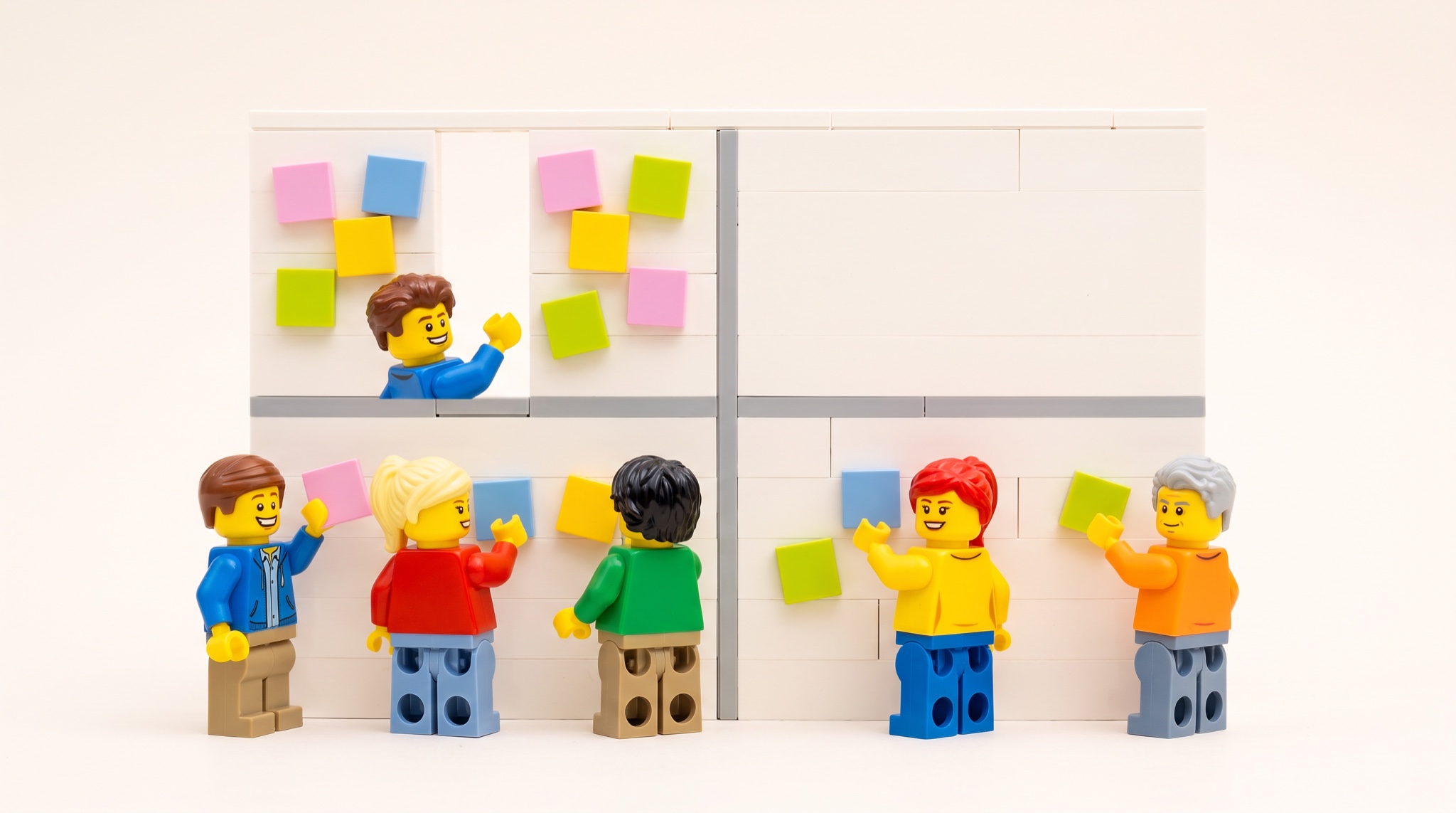
One unwritten rule. A year of quiet resentment. Four minutes to fix.
I ran a canvas with a team that had been tense for a year. Nobody could say why.
The answer surfaced when we tried to write down the rule for code review. Half the team wrote: every change gets reviewed before merge. The other half had been operating, in total sincerity, on review as a nice-to-have when you had time. Neither half knew the other existed.
A year of low-grade resentment ran on that gap. The seniors thought the juniors were cowboys. The juniors thought the seniors were precious about their code. Underneath it all: one rule that had never once been said out loud.
We fixed it in about four minutes once it was on the wall.
The hard part was never the fix. The hard part was that nobody knew there was anything to fix.
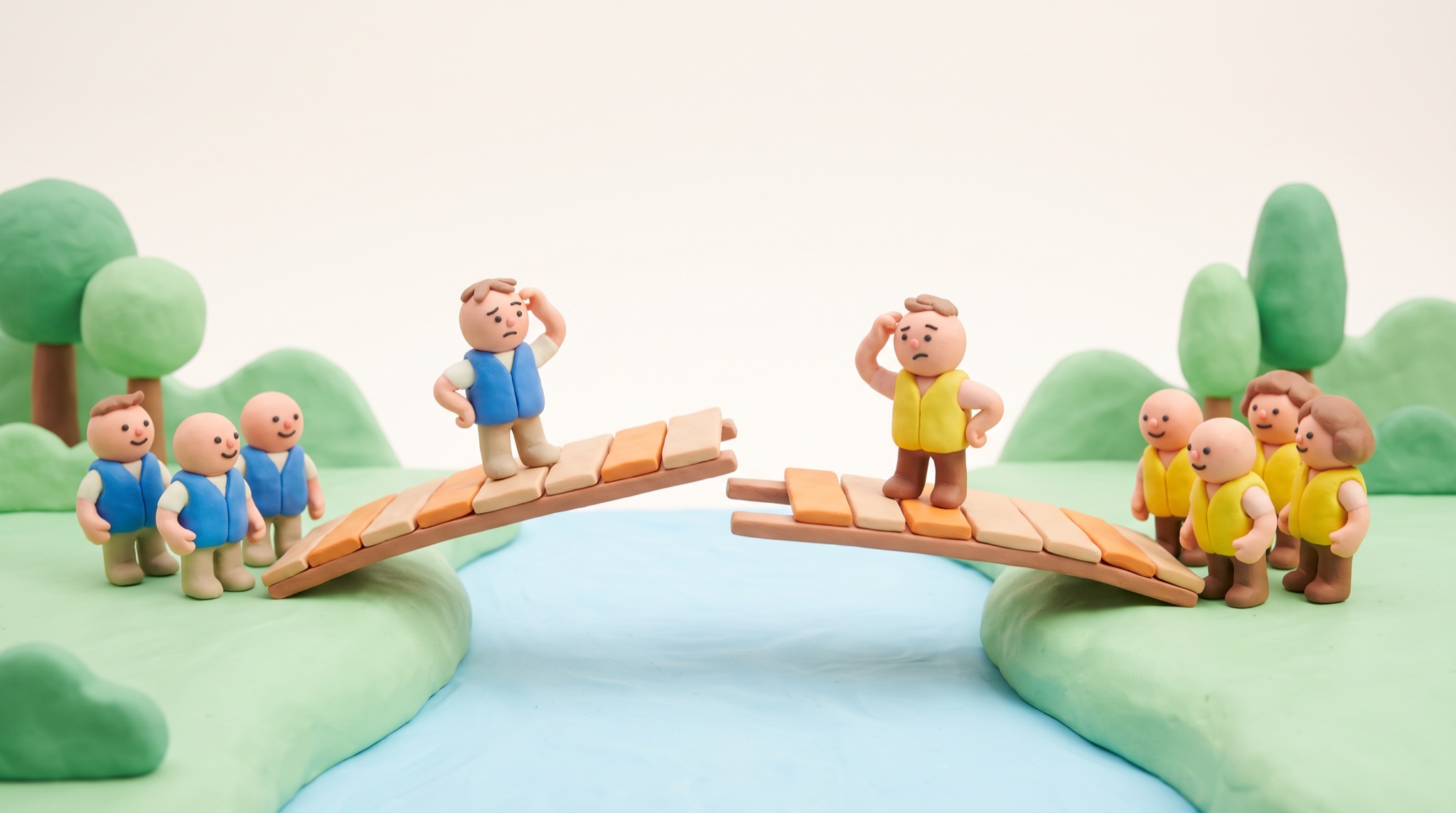
Every team is a tiny country. It has laws, and none of them are written down.
What "done" means. Who you actually ping when production burns, versus who the org chart says. The joke running since 2019 that a new hire won't get for six months. None of it is in the onboarding doc. Nobody writes down laws they've never had to think about.
So the new person learns the customs the only way available: step on each one in turn, and read the room's flinch.
Two teams in the same company, same building, same stack, evolve different definitions of the same words. They find out the day they have to ship together, when everything mysteriously grinds. Two rulers grading the same team is the same disease at company scale.
Put the laws on the wall
The Team Canvas is the cheap fix. A one-page workshop from Alex Ivanov and Mitya Voloshchuk (2015, theteamcanvas.com). The official guide says 90 to 120 minutes for the full version, 30 to 45 for the basic one, groups of two to eight. Sticky notes from every hand. A facilitator whose only real job is keeping people honest.
The real canvas is nine blocks. The cut-down basic version is five. Squint and they collapse into four questions. The compression below is mine, not Ivanov's:
   +------------------------+------------------------+
   |  WHAT WE ARE           |  WHY WE EXIST          |
   |  roles, goals          |  purpose, values       |
   |  (shared + private)    |                        |
   +------------------------+------------------------+
   |  WHO IS ACTUALLY HERE  |  HOW WE WORK           |
   |  strengths, weak spots |  the rules + rituals,  |
   |  what each person needs|  said out loud         |
   +------------------------+------------------------+
What we are is the easy corner. Why we exist is the one teams love to skip. Who is actually here is where people lie, politely, about their weaknesses. How we work is where the folklore becomes policy.
The canvas doesn't generate answers. It forces the team to say the quiet parts to each other's faces, once, with witnesses.
When someone asks the facilitator "what's the right answer here," hand it straight back: "what do you think it should be." You are the person holding the marker and refusing to let the awkward question slide.
The corner people squirm in
Bottom-left. Weak spots and needs. People squirm there. My best story actually broke in the corner next door.
Google put 180 of its own teams under the microscope and landed on the same corner. Project Aristotle measured 250+ attributes across 115 engineering and 65 sales teams. The strongest of the five dynamics separating effective teams: psychological safety. Can people admit mistakes and weaknesses in front of each other.
Who was on the team mattered less than how members treated each other. The corner people squirm in is the number-one predictor. That is why the lead goes first and lies the least.
Sticky notes make turn-taking physical. Woolley and colleagues measured a collective-intelligence factor in groups (Science, 2010; 699 people, groups of two to five). It predicted performance across tasks. It did not track average IQ, or the smartest member's IQ. It tracked social sensitivity and equal conversational turn-taking.
Groups where a few voices dominated scored lower. A round where every hand writes before anyone speaks is your filter against the loud half. The quiet half of the room is holding half your unwritten laws.
When to reach for it
Not annually. Reach for it when the country's borders move:
- A brand-new team that never set its own norms.
- Someone leaving, with a pile of unwritten ownership in their bag.
- Two groups merged by people who worked in neither.
- The quarter where everyone is quietly annoyed and nobody will say at what.
That last one is the real signal. Sourceless friction is unwritten rules drifted out of sync. The canvas drags them into the light before they calcify into "those two just don't get along."
The timing matters more than the ritual. Hackman and Wageman put numbers on it: 60 percent of the variance in team effectiveness is set by how the team is designed before it ever meets. 30 percent by the quality of its launch. Only 10 percent by all the real-time coaching that comes after (Organizational Dynamics, 2009).
The launch window is worth three times everything you will do afterward, 1:1s included. The canvas is a launch tool. Run it when the borders move, not when the calendar says offsite.
The Laminated Lie
These sessions have a bad reputation. Earned.
The failure mode deserves a name: the Laminated Lie. A beautiful canvas full of "synergy" and "trust" that nobody in the room believes. It is worse than no canvas at all. You documented the lie, printed it, and handed everyone a laminated reason to be cynical.
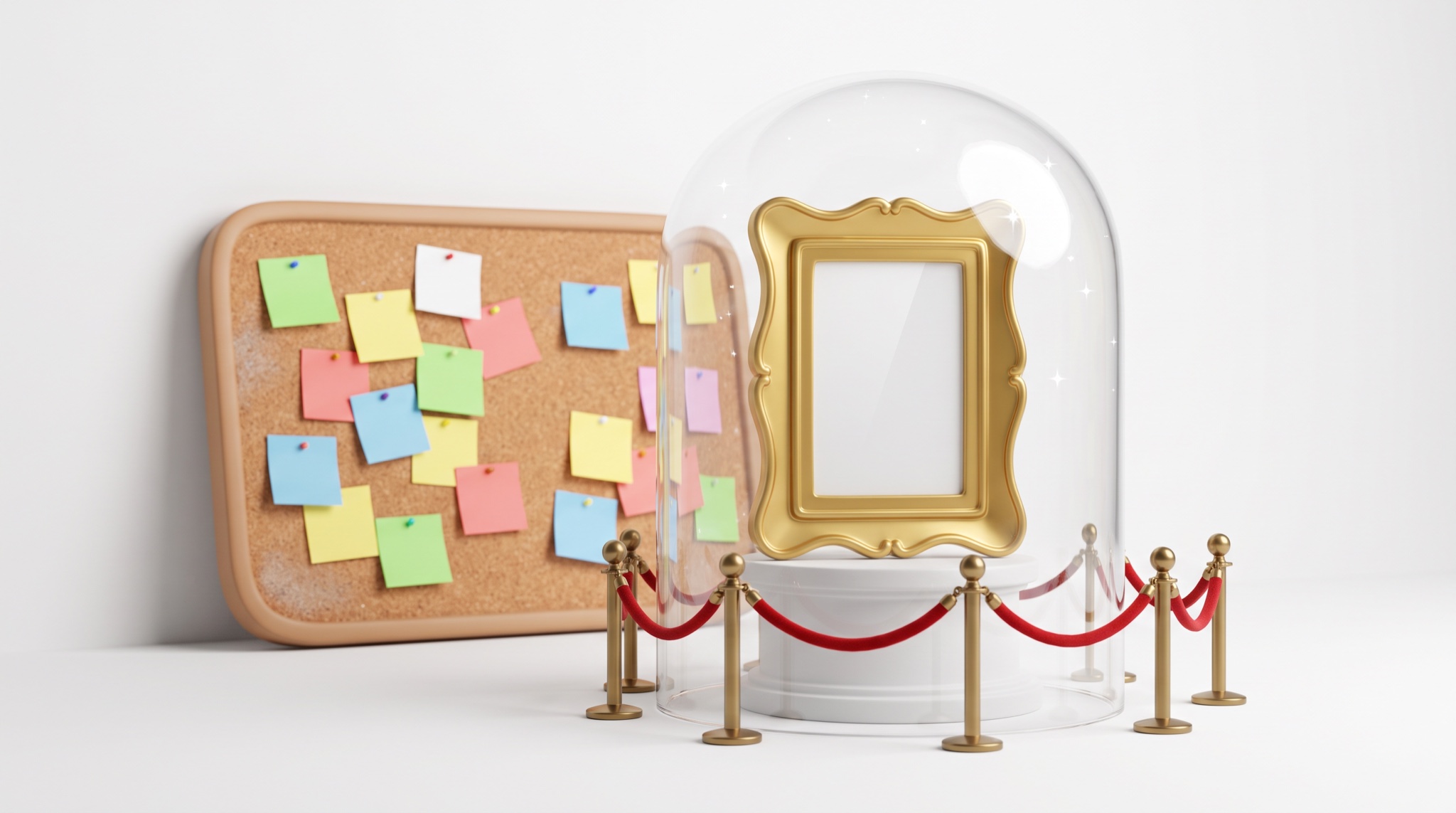
You can fake the artifact in an afternoon. You cannot fake the two hours where people say the true thing out loud.
The artifact is a receipt. The session is the product.
And the honest admission: a team that can actually do it, that can sit in a room and name what it is bad at and what it needs, mostly does not need the wall. The wall makes the honesty repeatable. That matters, because the alternative is every team relearning its own laws from scratch, one flinch at a time, every time a person joins or leaves.
Yours are hiding right now. Book the room.
The fix cost nothing. Finding out there was something to fix took a wall, a stack of sticky notes, and a tool called the Team Canvas.