Don't bet your review on one model
Running Claude, Codex, and Gemini in parallel beats standardizing on a single model. Three different blind spots rarely line up on the same miss.
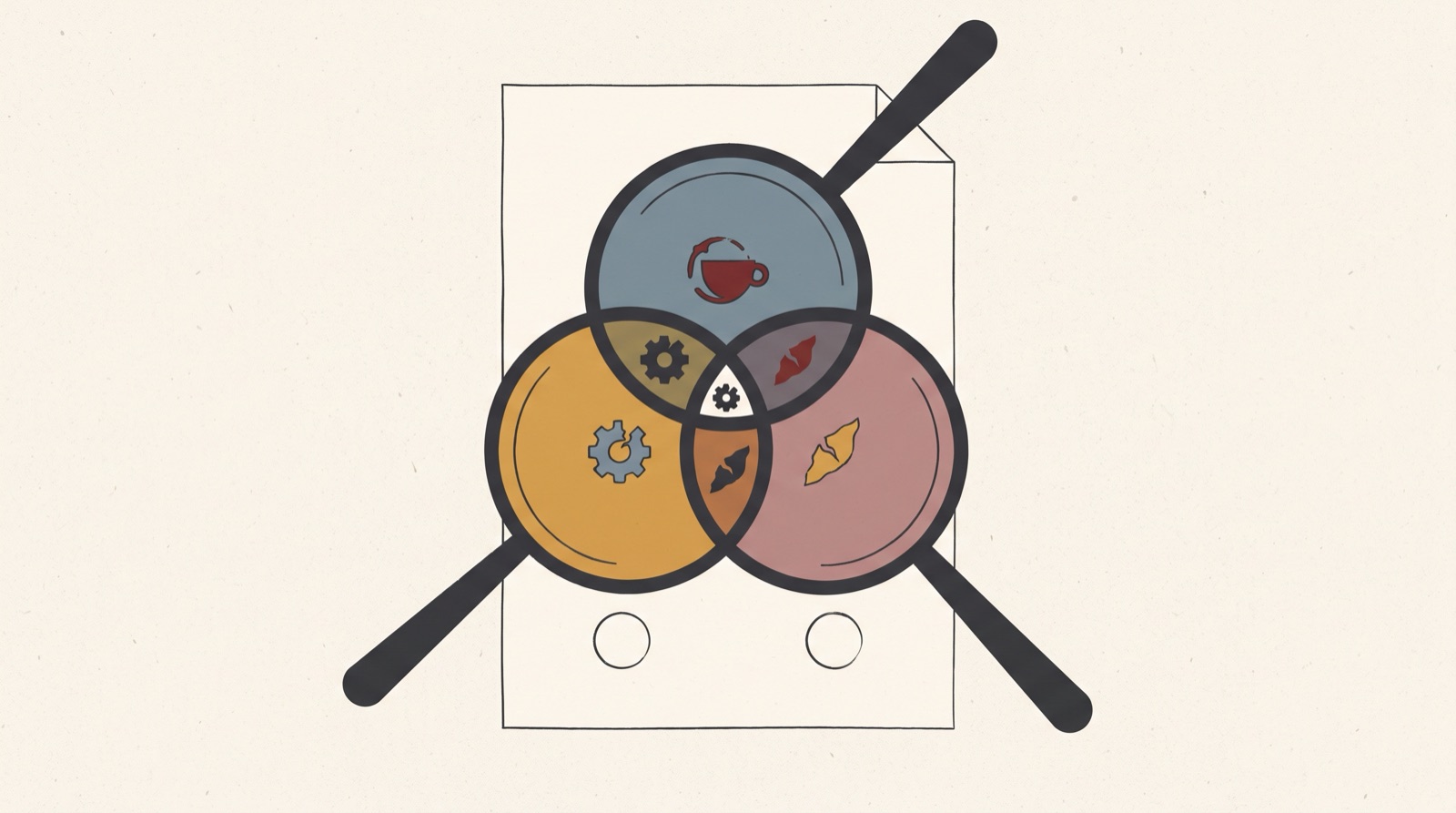
The reflex with LLM tooling is to pick a model and standardize. It's tidy, it's cheap to reason about, and for reviews and plans it leaves coverage on the table. A single model has a single set of blind spots, and you inherit all of them.
Why more than one model
Different models miss different things. Run a review through Claude, Codex, and Gemini in parallel and the failures rarely overlap: where one waves something through, another flags it. For the work where a miss is expensive (code review, architecture review, plan critique), that redundancy is the whole point. You're not paying for three opinions because you can't decide; you're paying because the union of three blind spots is much smaller than any one of them.
The pattern
The shape is always the same: fan out, judge, synthesize.
- Fan out. Dispatch the same task to several models at once.
- Judge. Score or critique the outputs, often with the models themselves, sometimes in a tournament.
- Synthesize. Merge into one result, keeping what survives scrutiny.
Two rules keep it sane. Orchestration stays on your strongest model: the coordination is where reasoning matters most. And deterministic, judgment-light work gets pushed to cheaper or local models, so cost tracks value instead of defaulting to the top tier for everything.
Where it pays off
Broader coverage and fewer misses on exactly the work you can't afford to get wrong. Plans get stress-tested from angles a single model wouldn't have raised. And because the cheap work runs cheap, the bill stays defensible.
The catch
It's more moving parts: more latency, more orchestration, more tokens. So don't fan out for everything. Reserve it for high-stakes work where a miss costs more than the extra spend, and keep the routine path on a single model. Treat AI as useful, not magic: measure what the fan-out actually catches, and if it isn't catching more, collapse back to one.