The Best Exit Interview Is the One You Never Run
People tell the truth on the way out for one reason: you have no power over them anymore. The mechanism behind that honesty, four rules for mining it, and the ghost who rewired how I run teams.

A quiet developer spent a year as a ghost haunting his own project. I heard about it only when he was already holding another offer.
He was the only fully-remote person on a co-located team. The team did its real thinking in hallway huddles and at adjacent desks. Decisions arrived half-made before they reached any channel he could see. The written updates meant to include him were an afterthought, when anyone remembered.
In his exit interview, I asked what one thing he would change, and the whole story came out.
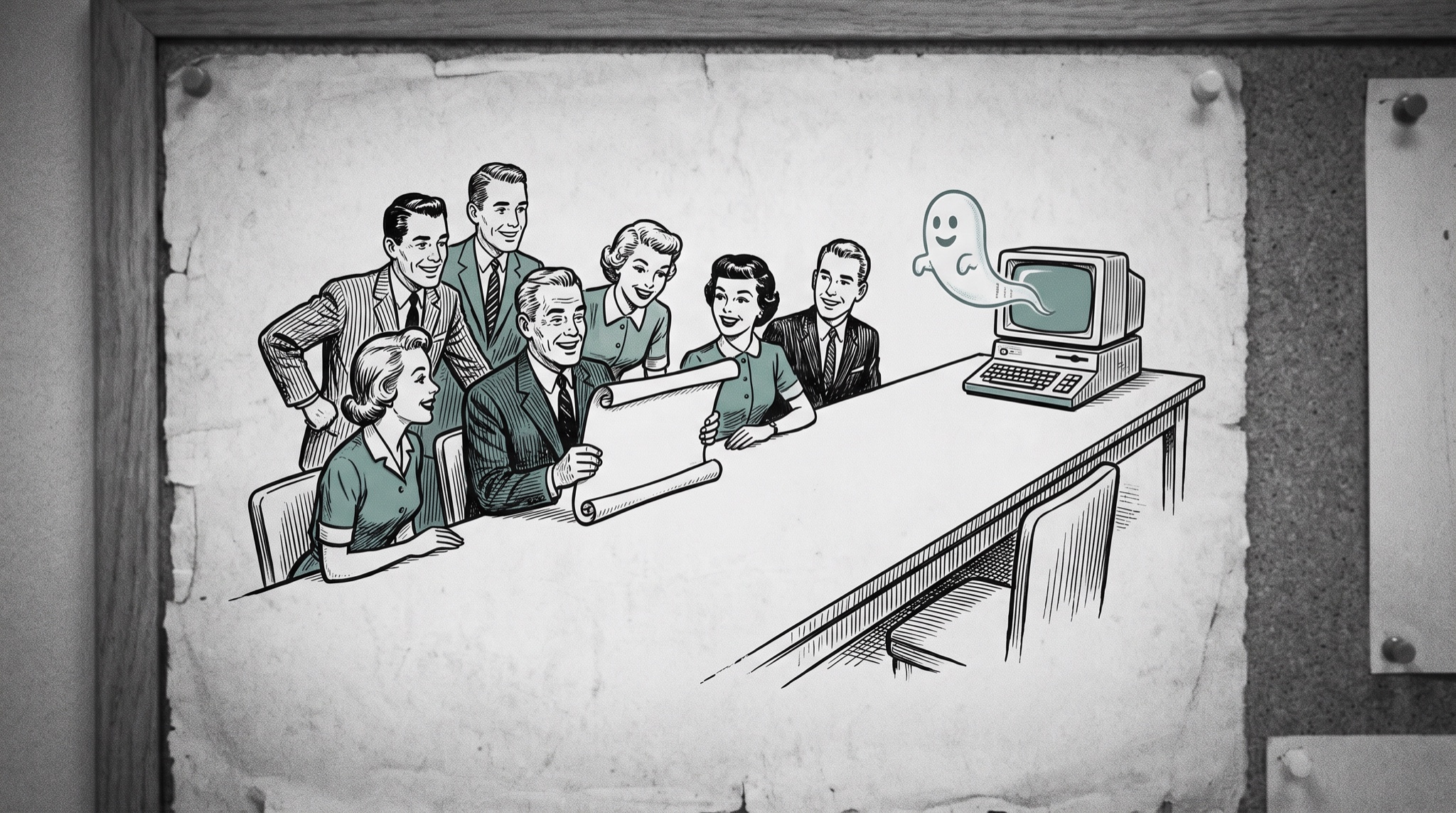
He wasn't bitter. That was the part that landed hardest. He had simply concluded, reasonably, that he was peripheral. Then he started behaving like it. Then he found somewhere he would be in the room.
None of this surfaced while he worked for me. Not once. The cost of raising it felt higher than the cost of quietly leaving, so he priced both and picked the exit.
While you hold power, silence is the rational move.
The leverage vacuum
Departing people tell you the truth. The ones who stay can't afford to.
"We need to talk" is the scariest four-word sentence a manager hears. It never comes before good news. Someone you rely on has a foot out the door. No amount of "but why" puts it back.
In tech, two or three years in a seat is normal. A single year is not rare. When resignation letters stack up, that's not bad luck. That's data. The exit interview is how you read it.
Why is the exit interview honest? One reason. They no longer need anything from you.
You hold their next review. Their comp. Their projects. Every honest sentence gets filtered through that. Then they sign somewhere else, and the power evaporates. Nothing is left to protect or angle for.
I call that gap the leverage vacuum. The honesty starts the moment your power over the person ends. Not because they suddenly got brave. Because the price finally dropped to zero.
That makes the exit interview the cheapest honest feedback you'll ever get. Most organizations throw it away.
Everett Spain and Boris Groysberg surveyed 188 executives and interviewed 32 senior leaders across 33 countries for "Making Exit Interviews Count," their April 2016 HBR piece. Fewer than a third could cite a single specific action taken because of exit-interview data.
Most companies I worked for didn't run them at all, or didn't care. I ran them anyway. The feedback was worth more than the org's indifference to it.
The vacuum splits this craft into exactly two jobs: don't refill it while it's open, and learn to manufacture it a year early with the people still in their seats.
Four rules, all learned the hard way
Not the last day. By then the person has mentally moved out. They want their laptop collected and their badge killed. Do it a week or two after the announcement. The heat has passed, but they're still around and still engaged. That window gets you reflection instead of tears or a shrug. Spain and Groysberg's research lands in the same place: the useful window sits between the announcement and the departure, not at the door.
Don't run it yourself if you're the subject. A developer leaving my team makes me exactly the wrong interviewer for feedback about that team. The vacuum isn't complete. I'm still a reference. This industry is small; they may want something from me in three years. They'll be polite to my face, on reflex. A peer or my own manager gets the real answers. HR gets them if the problem might be me. The research backs the instinct: second-line managers gather more honest exit feedback than direct managers, and their interviews lead to follow-up action more often.
Shut up. Fix nothing. The instinct is to explain yourself, or worse, to start fixing things on the spot. Kill it. Every minute spent justifying the past is a minute not spent learning. It also tells them their feedback is being argued with, so they stop giving it. You're not there to win. You're there to listen and write it down.
It's rarely the money, even when they say it's the money. I've had people paid under market stay for years. I've had people leave for reasons no raise would touch, like a review they never forgave. I once broke my best engineer with a promotion's workload and none of the title; no comp band fixes that either.
Compensation is the most socially acceptable thing to write on the form. One study Spain and Groysberg cite puts a number on the gap: 59% of former employees gave different, more specific reasons for leaving when asked again months after departure.
The stated reason at the door is a first draft. The real reason under it is usually running out of anywhere to grow.

One question is worth stealing from their HBR article. Ask every departing employee to finish the sentence "I don't know why the company doesn't just ______." People answer it straight. They hand you the fix that's been staring at you for a year.
What the ghost changed
His exit interview became a blueprint.
Default-written decisions. Remote-first meeting hygiene. A rule that if one person is dialed in, everyone is dialed in.
I learned more about how my team actually operated from one departing person with nothing to lose than from a year of standups with everyone who stayed.
Have the conversation a year earlier
Spain and Groysberg's research points to the same conclusion: the exit interview should be the last conversation in a chain you started a year earlier.
In most orgs it's the first honest conversation anyone has had with the person. Spain said it flat: companies use exit interviews as an excuse to skip the stay conversations.
If the only time you ask what would make someone stay is on their way out, you already lost. The answer is real and useless.
The reverse is harder for the exact reason the exit interview is easy: the power is still in the room. Nobody hands you the vacuum. You manufacture it by asking while the answer can still change something, then proving, over and over, that the honest answer won't be used against anyone.
That proof gets built in the boring venue nobody protects: the 1:1 you never cancel. Weaponize one honest answer once, and every answer you get afterward is the polite one.
Get it right and the ghost tells you about the hallway huddles while there's still time to fix them. Get it wrong and you hear it the way I did, from a man already holding another offer.
The best exit interview is the one you never have to book. Ask while the answer can still change something, and prove that answering won't cost them.
So I run the reverse, on a schedule.