Fix the org before you scale it
Every team I inherit asks for headcount first. It's almost never the fix. Ownership gaps, the wrong people, or too much noise: diagnose, fix, then hire. Plus the two years I spent killing matrix management.
I argued the system was wrong. I lost that argument for about two years.
Two managers must agree
When I joined Contentsquare's Data Engineering group, the operating culture was matrix management. People reported one way for their function and another way for their work. On the org chart it looked collaborative. In practice, nobody owned an outcome.
Every decision needed two managers to agree. That sounds like a safeguard. It's a veto. Two managers on different reporting lines carry different incentives, so every agreement is a negotiation, and the default outcome of a peer negotiation is deferral.
Nobody logs a deferral as a failure. It goes on the calendar as one more alignment meeting. The decision doesn't get made and doesn't get killed. It just gets old, and the team waits.
I was the one manager who wasn't in the headquarters office. Matrix survives on hallway conversations: two managers in the same building settle their conflict at the coffee machine, and no process ever records it. I wasn't in the hallway. I got the outcomes over video, pre-agreed or permanently pending. Being graded by headquarters with a different ruler was part of the same package.
There was no single meeting where it turned, no killer deck. I kept making the case, and the system kept making it for me: more decisions parked in alignment meetings, waiting for two managers to agree.
Then I won it. Matrix management stopped as a practice in the group. Every team got a single owner accountable for a single outcome.
That fight is the whole reason I'm allergic to ambiguous ownership. No management book taught me the failure mode. I lived it, on the receiving end, from the wrong side of the hallway.

Hiring feels like progress
Every team I've ever taken over came with the same request stapled to the handover: we need more people. Sometimes that's true. Usually it isn't.
A team that isn't delivering at full capacity has a structural reason, and headcount just buries it under more people. Before I add anyone, I find out why.
It's usually one of three things: ownership gaps, the wrong people, or too much noise.
Fix those and the team gets faster inside a quarter. Not because it got bigger. Because the friction came out.
I'll be straight: there's no dashboard behind that claim. What I have is a two-year scar.
Platform orgs drift into silos. Nobody decides this. It accretes. Work gets handed across walls. Ownership goes fuzzy exactly at the seams. Everyone is busy, and nothing moves.
Then the conversation turns to headcount. Every time. Hiring is the legible move. A req is a form. It has a budget line, an approver, a process.
Restructuring has no form. It's a fight that makes enemies before it makes progress, and it opens by admitting something you built is broken. So managers reach for the req.
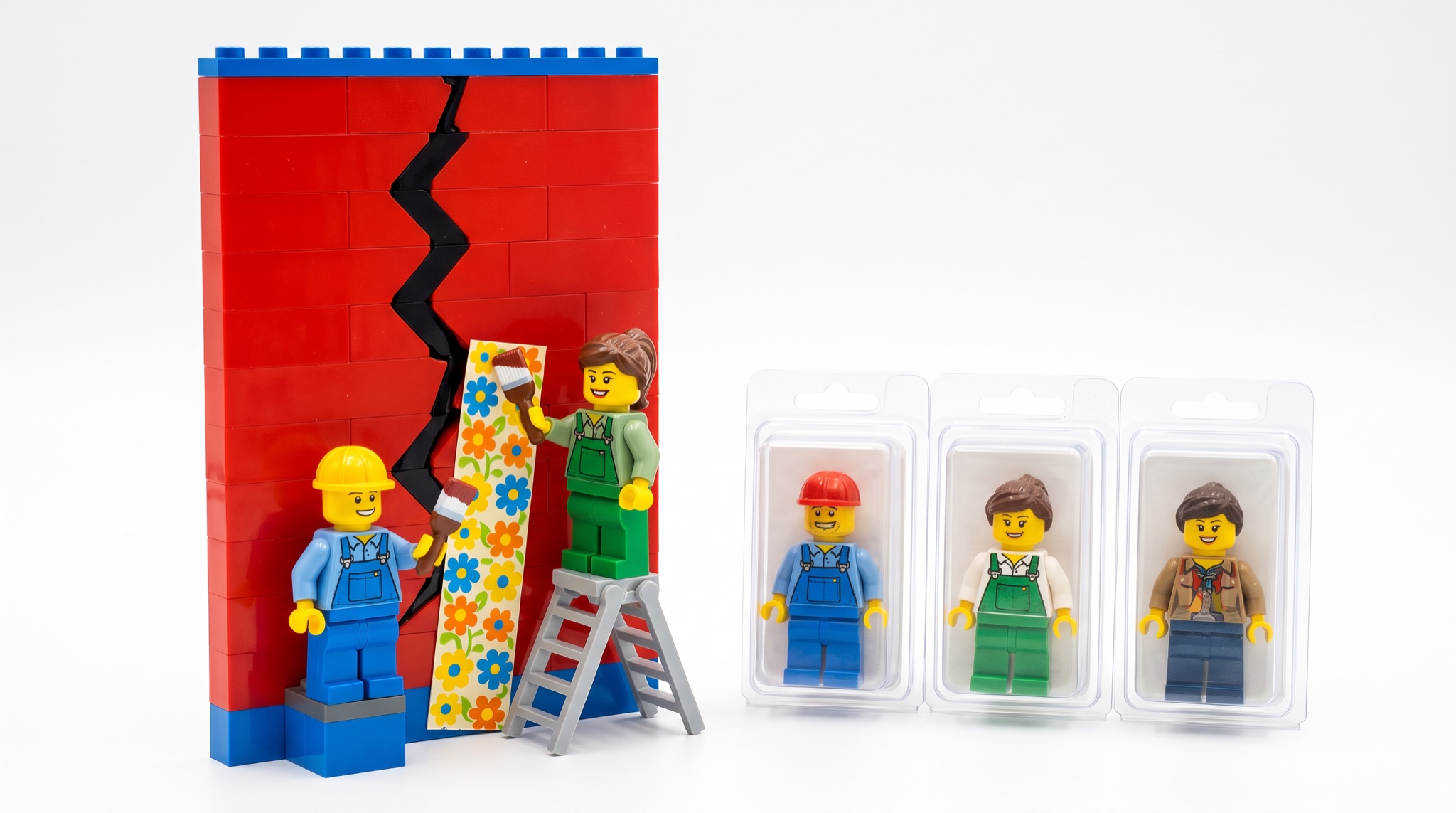
The pattern deserves a name: headcount papering. Using hiring to paper over a structural failure instead of fixing it. The crack is still in the wall. The wallpaper just got more expensive.
Ten people confused about who owns what becomes fifteen people confused about who owns what.
Run the diagnosis
Three suspects, in the order I check them.
Ownership gaps. Walk the systems and ask one question: who owns this? If the answer is two names, a committee, or a shrug, you found the leak.
Every system needs one owner who can explain its failure modes, its tradeoffs, and its dependencies without opening a doc. When ownership is that clear, decision loops get short and most "we need a meeting" problems evaporate. When it isn't, you get the matrix story above, at whatever scale you're running.
The wrong people. Sometimes the structure is fine and the problem is a person. Less often than managers fear, more often than they admit.
The ugliest version isn't a weak hire. It's a strong person in the wrong seat: sometimes a seat you promoted them into, sometimes a lead's load you handed them without the title. I broke my best engineer the second way.
Watch how people handle ambiguity. Watch what they do when something breaks. Those two signals beat any performance review.
Too much noise. The team can't think because the org won't shut up. Status requests, drive-by asks, meetings that exist because a calendar allowed them.
This one is fully the manager's job: use authority to remove friction, not to show rank. Block the noise upstream of the team.
A meeting earns its slot three ways only: it unblocks a decision, it resolves a conflict, or it aligns real cross-team work. Everything else goes to writing.

The deal I offer
Structure gets you halfway. The operating stance carries the rest, and mine is simple: start from trust.
Strong people get autonomy, scope, and cover, early. Then I watch the same two signals from the diagnosis: how they handle ambiguity, and what they do when something breaks.
As long as the judgment holds, I stay out of the way. When judgment goes weak, or a problem gets left to drift, I get involved, fast and close. That's the deal: high autonomy when trust is earned, a much shorter leash when it isn't.
The deal requires clear ownership. You can't hold someone accountable for an outcome two managers share. Trust-first management and matrix management can't coexist. One of them has to die, and I already told you which one I chose.
Hire after the diagnosis
I'm not against hiring. Strong teams need to grow, and one excellent lead is often worth more than two average hires.
I'm against hiring as the first move: reaching for the req before you've diagnosed why the people you already have can't run at full speed.
I've watched the same reflex fail from the other side too: a hiring overhaul that worked everywhere except the one place I actually cared about, because the real problem there was structural. You can't interview your way around a broken structure.
If you still need people after the diagnosis, hire hard; you'll know exactly what for.
Skip it and I can tell you what you get. I spent two years watching: a bigger org, the same crack, nicer wallpaper.